

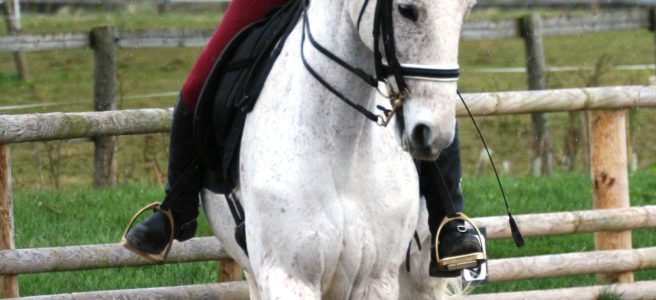
What is lateral work?
Lateral work is where the horse is ridden sideways. This article is a simple introduction to the basic lateral movements.
The pre-requisite to riding lateral work is to ride a straight line and a circle. This requires understanding of flexion, bend, and straightness. For simplicity, I would describe a horse correctly bent through its body as a banana shape, so we have ‘left banana, right banana’.
It is important to remember that your inside rein and leg are on the inside of the bend of the horse. Thus the horse is bent around your inside leg. Your outside rein and leg are on the outside of the bend of the horse.
There are two ‘families’ of lateral work. The first group is where your inside leg, and your outside rein are dominant. The other group is where your outside leg and inside rein are dominant.
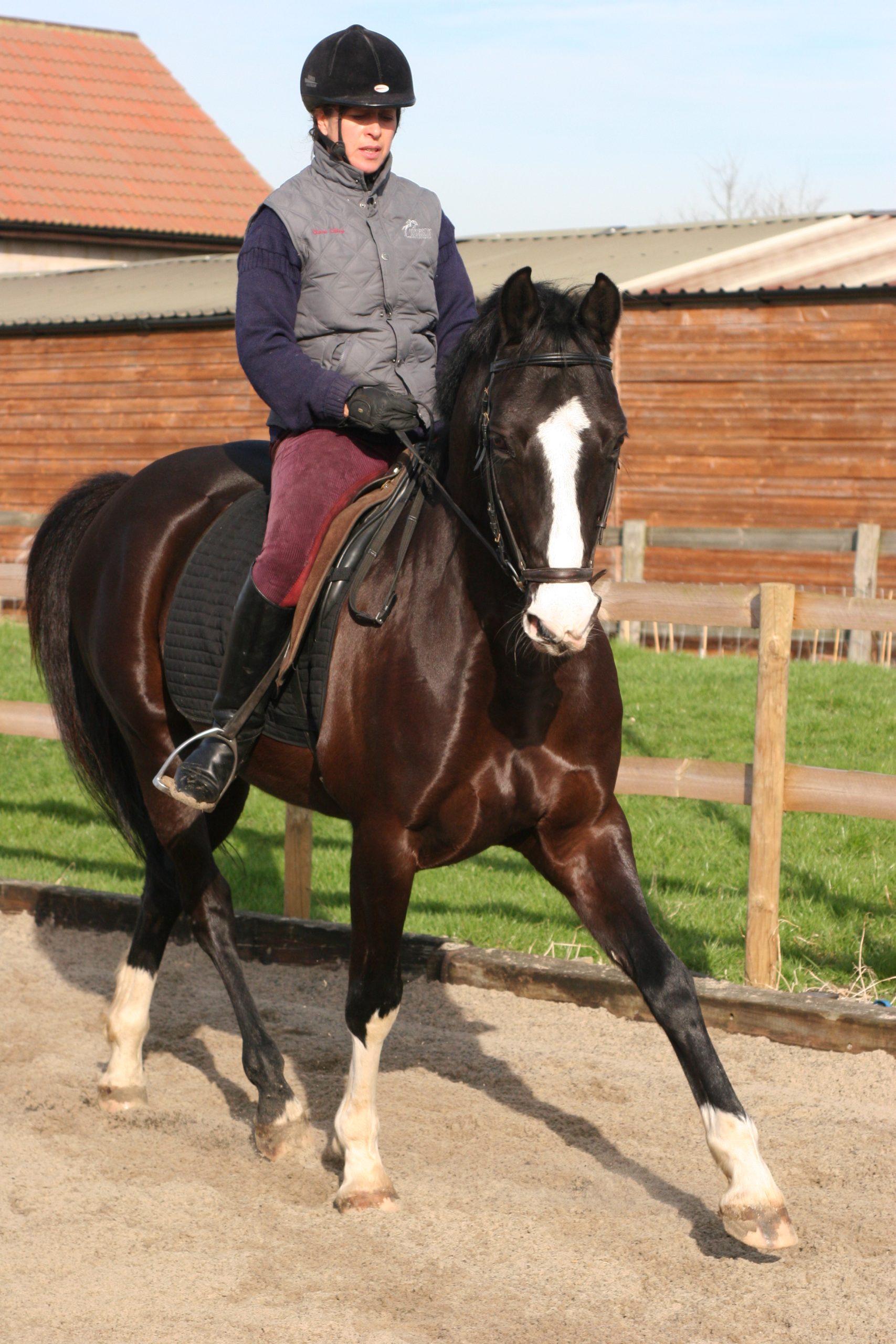
Group 1: the horse is bent away from the direction he is going in.
Leg yielding
Shoulder-in
Turn around the forehand
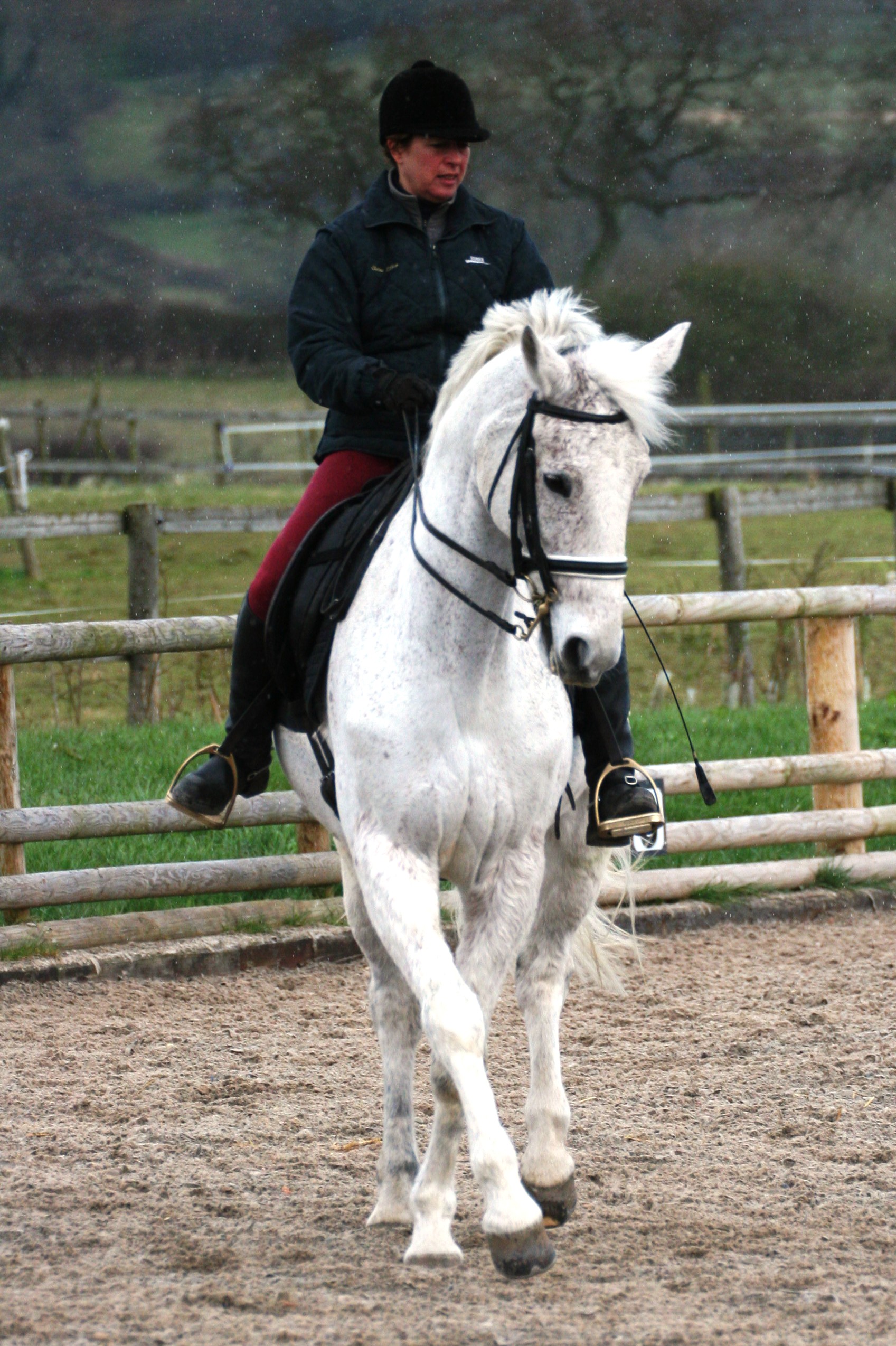 Group 2: the horse is bent the way he is going, his ears pointing in the direction of travel.
Half-pass
Haunches-in (Travers)
Pirouette
So why ride lateral work?
Lateral work is like ‘ridden physiotherapy’, both for the horse and the rider. The horse becomes your dance partner, weaving movements together – in harmony
Benefits for the rider:
Increased awareness of body position, co-ordination of seat, leg and rein aids, accuracy when riding movements.
Benefits for the horse:
Improved suppleness through the whole body, flexibility and ride ability. By that I mean a greater understanding of the nuances of the rider’s aids.
How to ride the movements
I cannot stress too much the importance of lateral work in walk. Besides is being logical to learn the movements in walk before proceeding to trot or canter, learning ‘how the buttons work’ in a relaxed manner ensures the horse understands what he is expected to do, which of your legs to move away from, which rein gives him support, and how to adjust his balance under your seat.
Of course, we always are aware of using both reins and legs, with the less dominant rein and leg playing a supporting role. For example, in shoulder-in left, where the inside aids are the left ones, the active aids are left (inside) leg, right (outside) rein, with the inside rein maintaining flexion, and the outside leg preventing the haunches from drifting.
Shoulder-in left
Left banana. Active aids: inside (left) leg, outside (right) rein
Shoulder-in right
Right banana. Active aids inside (right) leg, outside (left) rein
Haunches-in left
Left banana. Active aids outside(right) leg, inside( left) rein
Haunches-in right
Right banana. Active aids outside(left) leg, outside (right) rein
School patterns
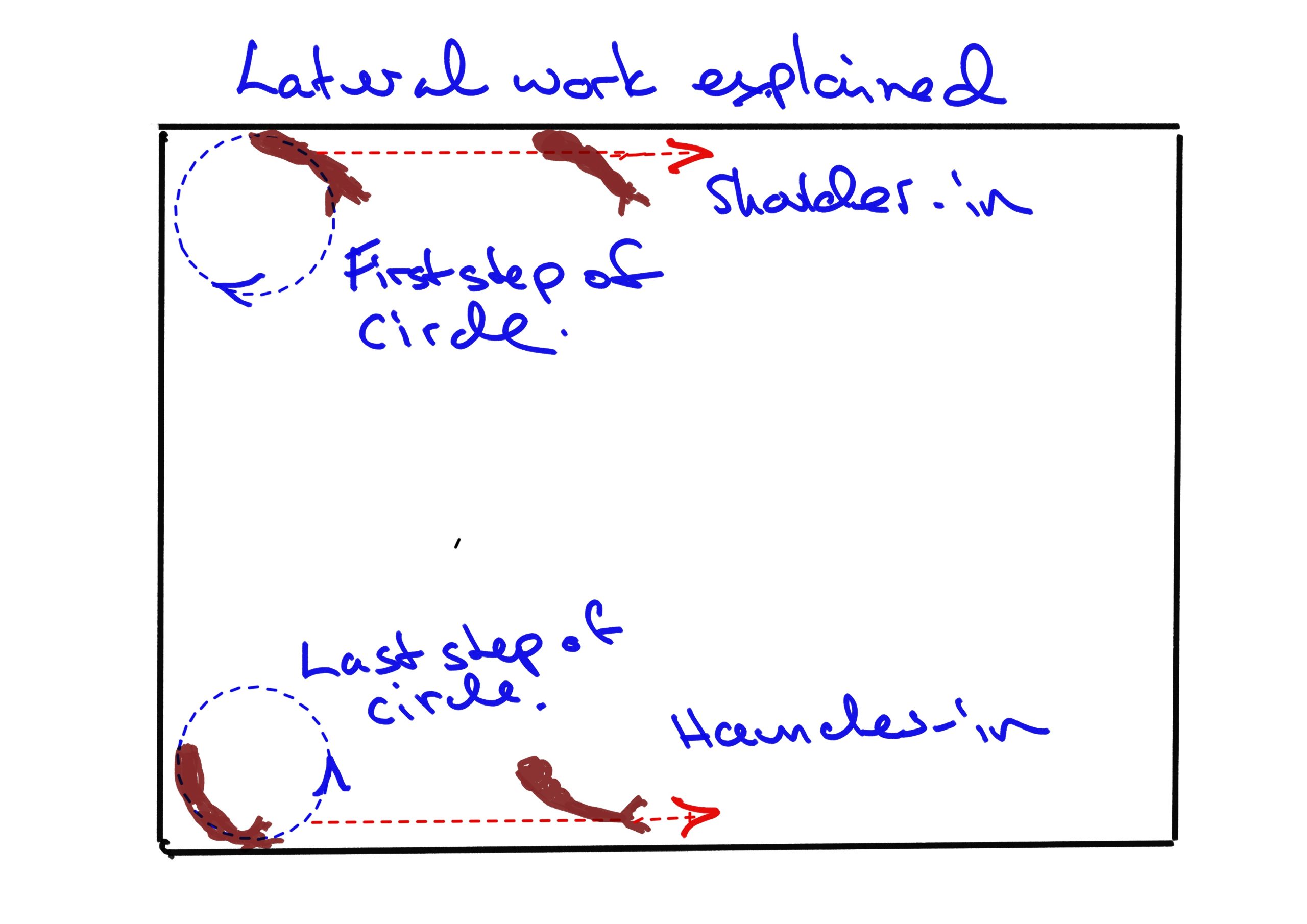 The simplest way of introducing shoulder-in is from a 10 metre circle. The first step of the circle equates to shoulder-in. Maintain your position, and the bend of the horse, and travel a few steps sideways along the track. Then straighten up and continue along the track. Repeat a few times.
To introduce haunches-in, the last step of a 10 metre circle equates to haunches-in. Maintain your position and the bend of the horse, and travel a few steps sideways along the track. Continue straight before repeating the exercise.
What is the difference between leg-yielding and half-pass?
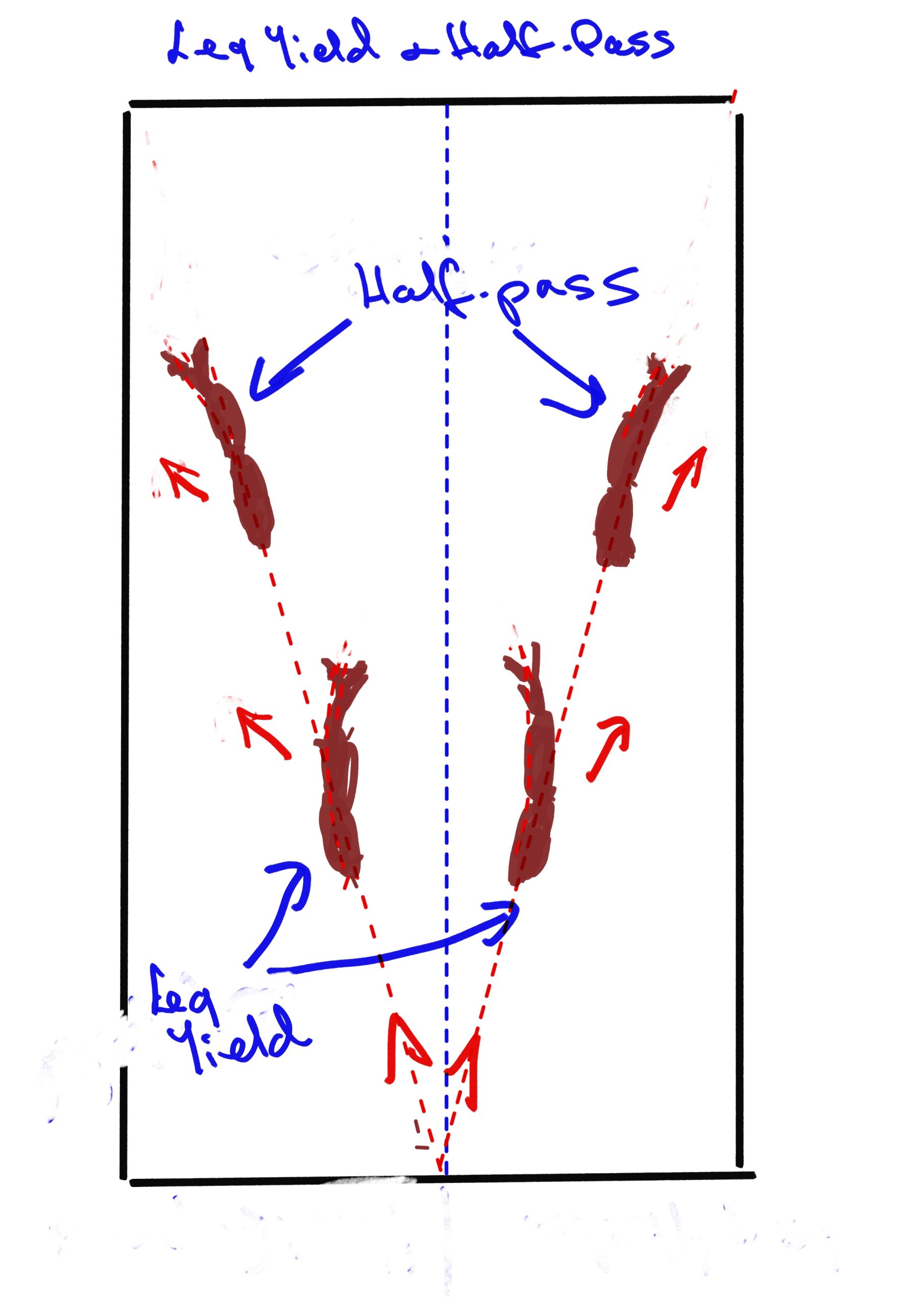 If we take ‘banana left’ and ride down the centre line, moving the horse away from the inside leg into the outside rein is a leg yield going to the right.. With the same banana left, moving the horse sideways from the outside leg, into the inside rein becomes a half-pass to the left.
Conversely, with ‘right banana’, you end up with leg yield left, and half-pass right.
All work © Claire Lilley
Webinar on Lateral work coming soon.
For other webinars, please go to the shop page.


